The learning design behind MIKO
Why MIKO creates learning that makes a difference
MIKO was created because traditional formats can share knowledge, but rarely change behaviour. Our learning design combines clear objectives, realistic decision-making situations and measurable transfer into day-to-day practice.
MIKO follows a clear learning logic
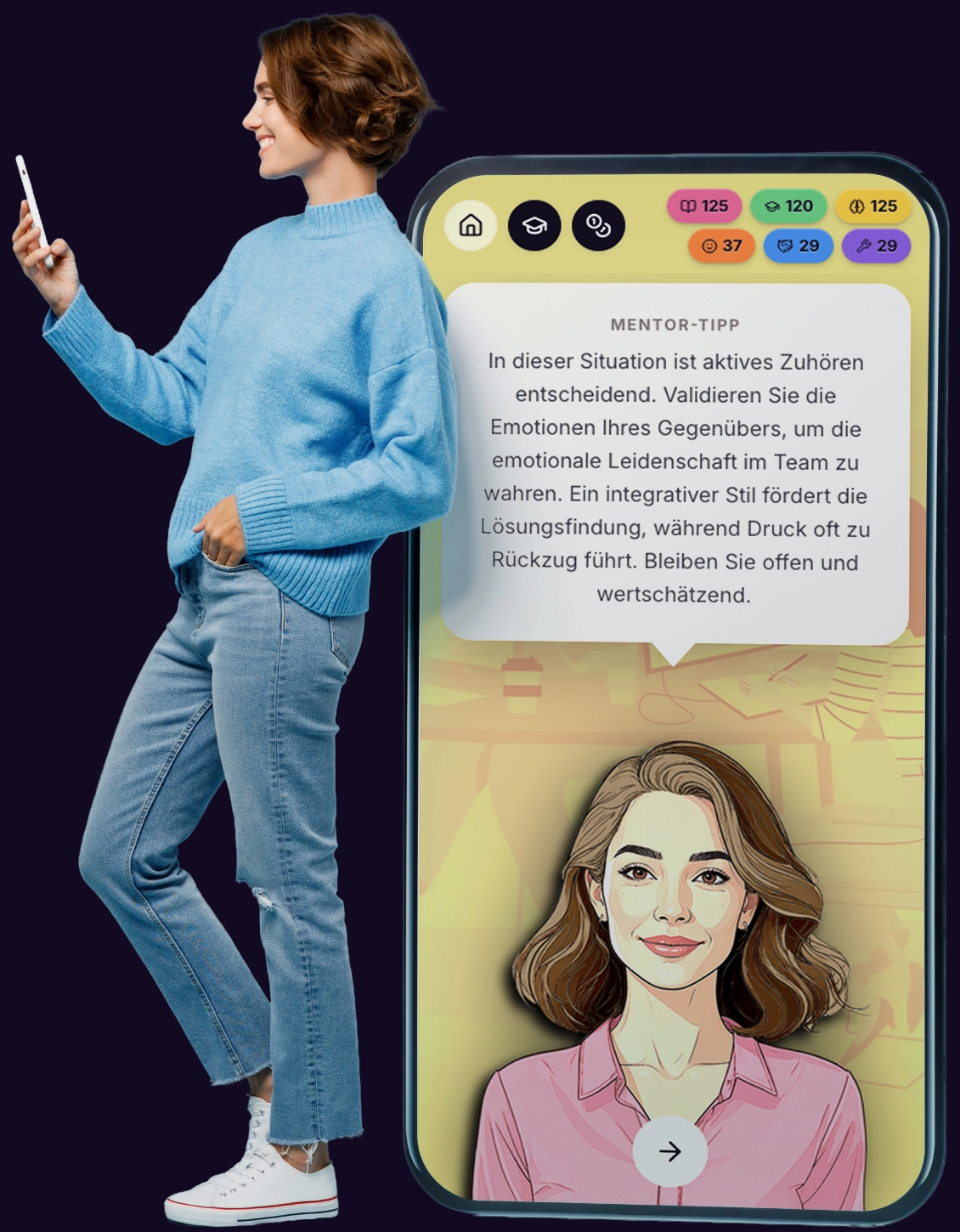
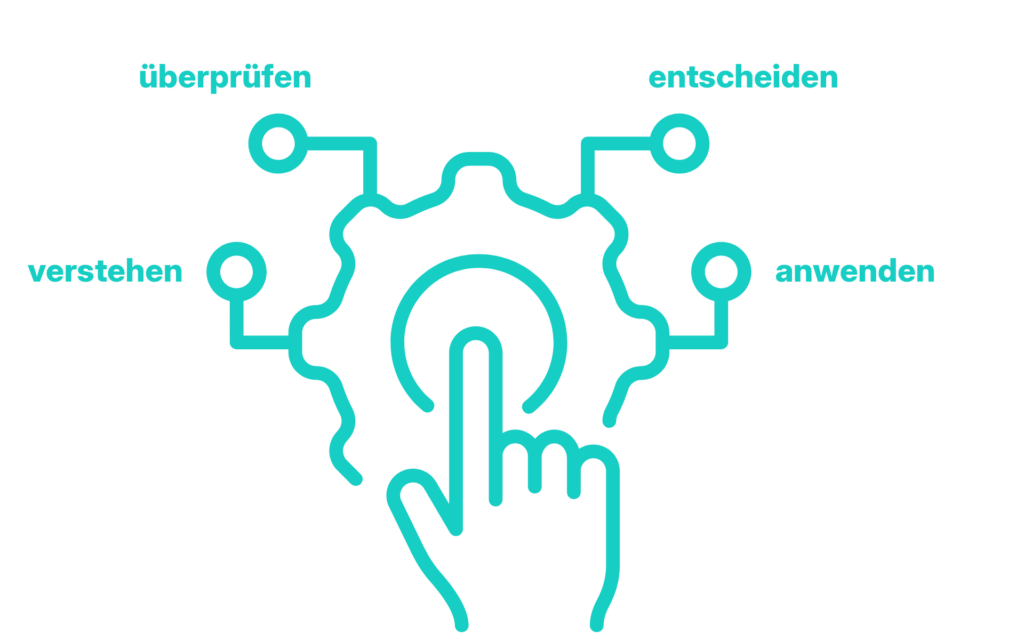
At the core are scenario-based decision situations built around concrete case studies: participants choose courses of action, experience the consequences and see which principles they have applied or overlooked. The final level of every learning journey is an AI role-play that serves as a practical assessment. Here, participants independently apply what they have learned in an interactive conversation. The learning journey thus progresses from input, activation and feedback to independent application.
Evidence-informed. Designed for behaviour.
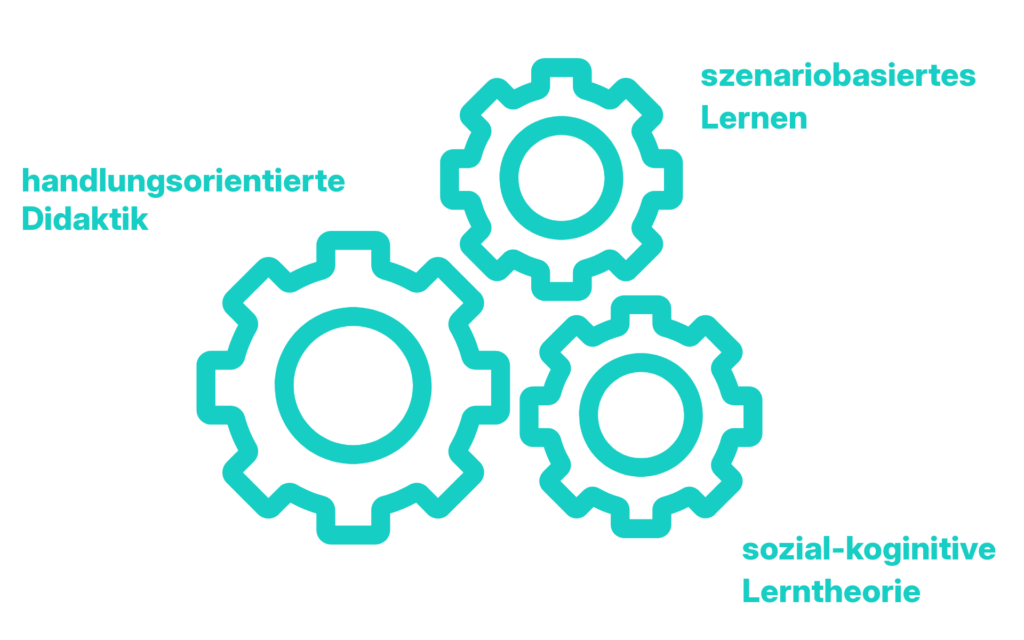
MIKO’s learning design brings together three established principles: scenario-based learning, action-oriented learning and social cognitive theory. Scenarios place learners in realistic situations where they make decisions and experience consequences without real-world risk. This approach supports the transfer of learning into practice by helping people apply knowledge in context, rather than merely recall it. Action-oriented learning is based on a simple premise: people learn primarily through doing, testing and reflecting — not through instruction alone. Bandura’s social cognitive theory explains how people adapt behaviour through observation, their own actions, feedback and a growing sense of self-efficacy. MIKO reflects this learning loop through AI-powered role-play and decision pathways. Social cognitive theory emphasises the interplay between people, behaviour and their environment, while self-efficacy is a task-specific belief in one’s ability to act successfully. Digital learning sequences are linked with workshops, coaching and practical assignments. Certificates are awarded only when both the digital learning and the practical components have been completed. The result: knowledge becomes behaviour that can be practised — and seen — in day-to-day work. How strongly learning shows up in practice always depends on the topic, the learning context, opportunities to practise and the support people receive in their everyday work.